Brief details
Duration
7 months
Deliverable
board game set
Role
game designer, strategist
TOOLS
adobe suit, figma, mira
Project name
Mob-bay
Client
passion project
Industry
board games, strategy, game design
THE CONTEXT
THE Reference
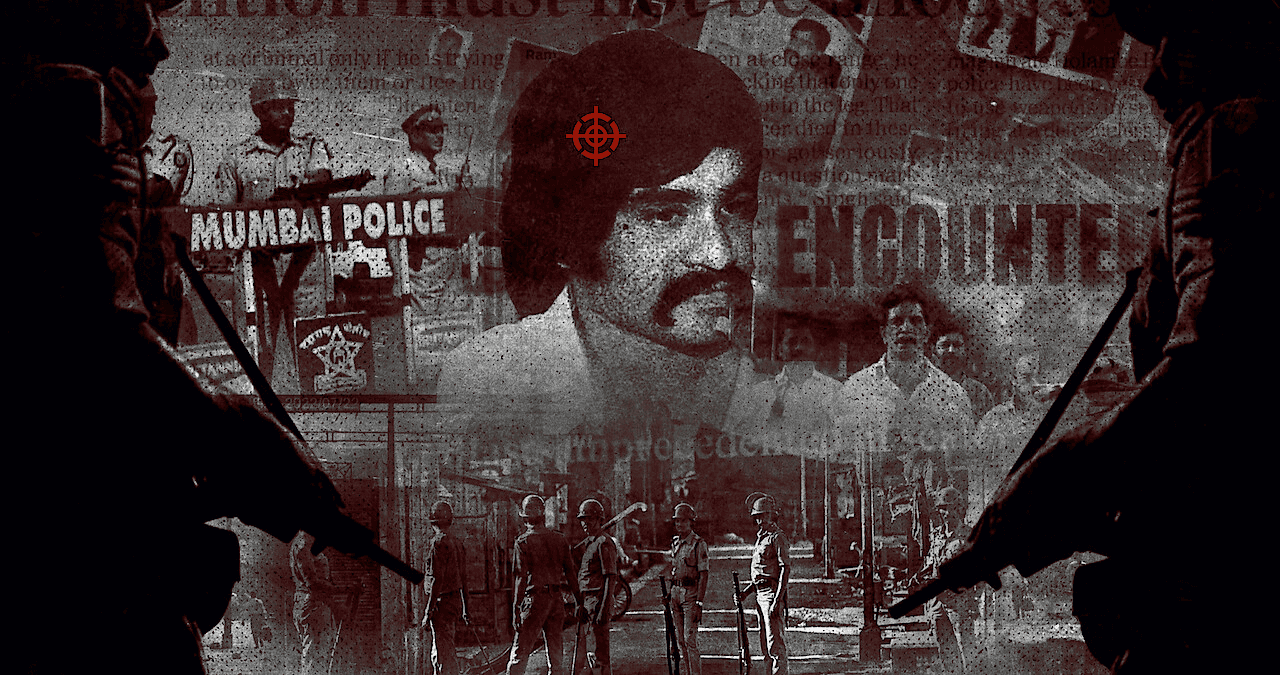
To achieve authentic, gritty immersion, the design for Mob-Bay was grounded in intensive research that went beyond typical references.
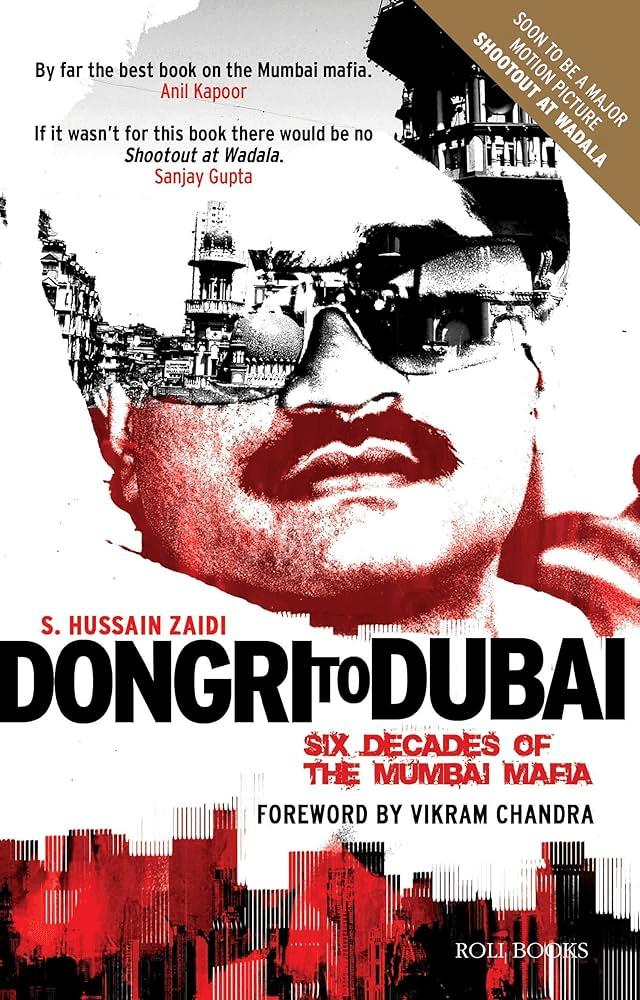
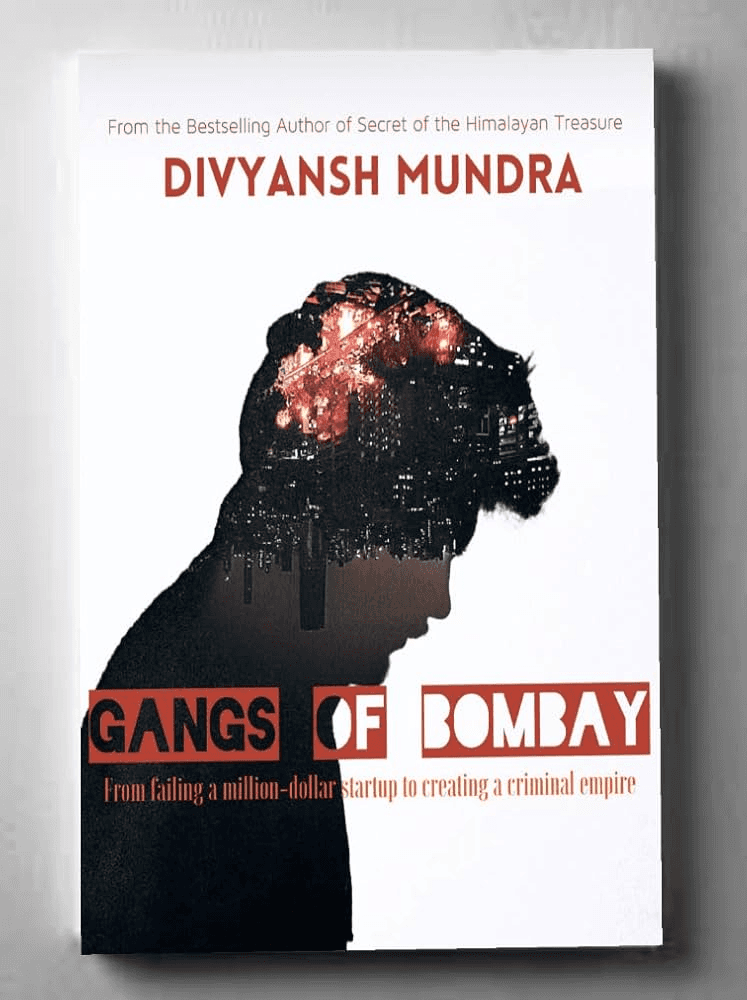
The strategic framework and factional conflicts were heavily influenced by journalistic deep dives like S. Hussain Zaidi’s Dongri to Dubai and Shujaat Saudagar’s Bambai Meri Jaan.
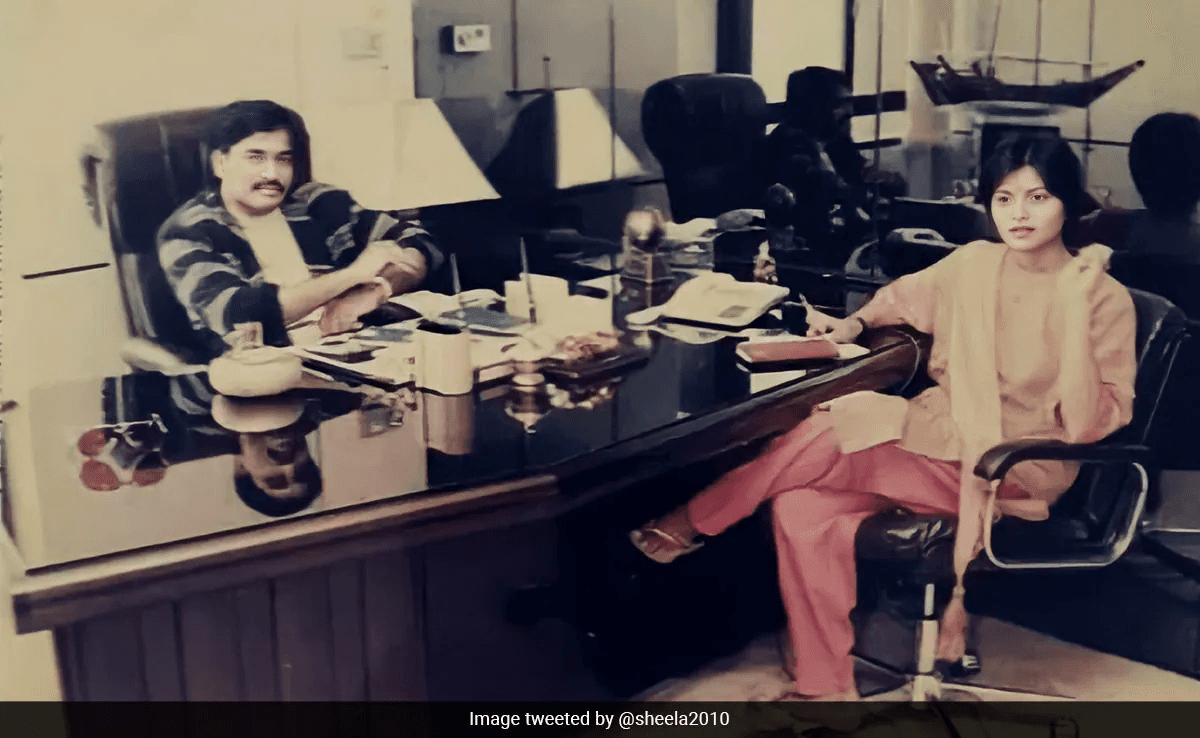
Furthermore, the game’s unique voice and authentic underworld lexicon were drawn from interviews with veteran reporters of that era and the raw atmosphere captured in personal recordings of the gangsters which went public. This rigorous, multi-source research ensured that every mechanic and visual choice was a strategic echo of the volatile 80s and 90s Bombay underworld.
Mob-Bay draws its narrative gravity from a turbulent and notorious chapter in the history of Mumbai (then Bombay), where organized crime reached unprecedented heights of influence and violence between the 1960s and 1990s.
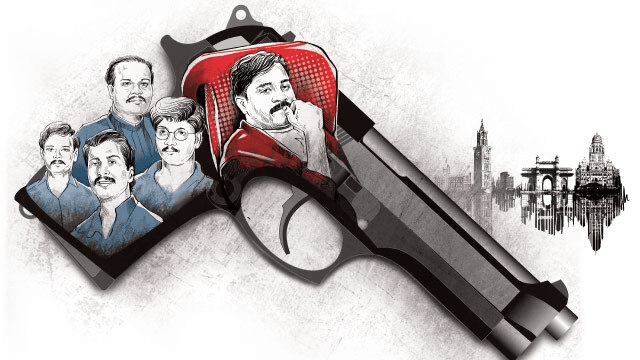
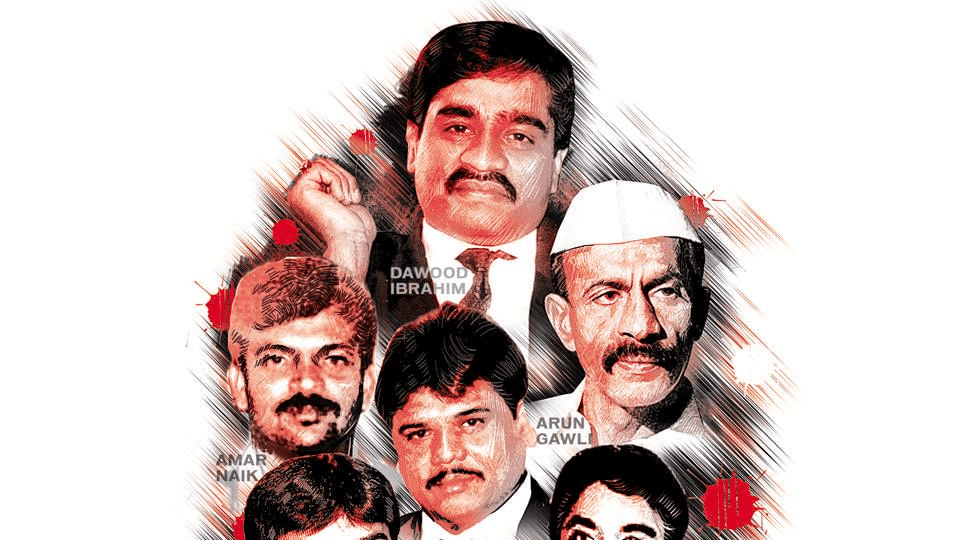
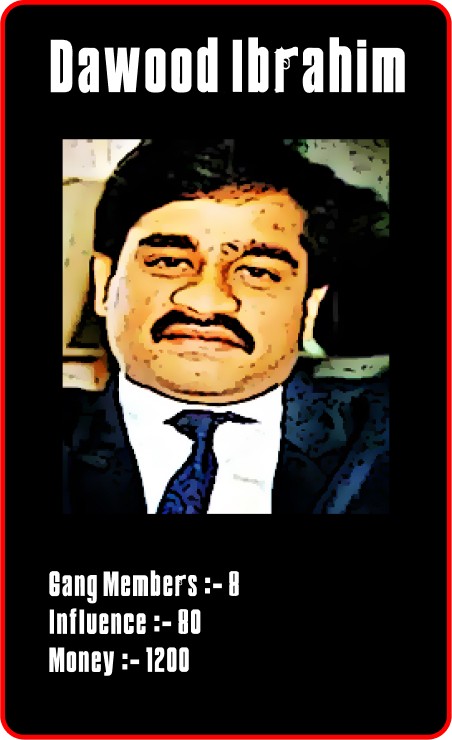
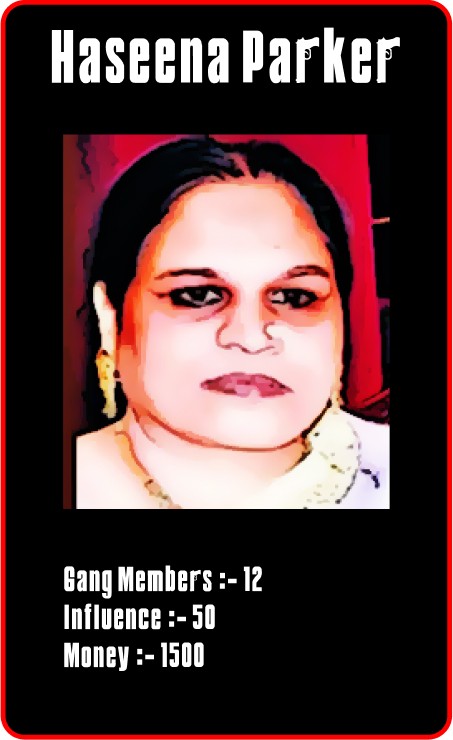
This period was defined by intense Gang Wars and Vendettas as rival syndicates—led by real-life figures—battled fiercely for total control over the city’s economic lifeblood. The game’s premise is built upon the reality of these powerful struggles, allowing players to embody a gangster from that era, such as Dawood Ibrahim or Haseena Parker, and plot their own route to conquer Bombay.
Success in this volatile world hinged on leveraging Influence, managing Gang Members (used to commit crimes or defend properties), and navigating the constant threat of the Wanted Level when trying to expand control over the city.
The Gangster Identity
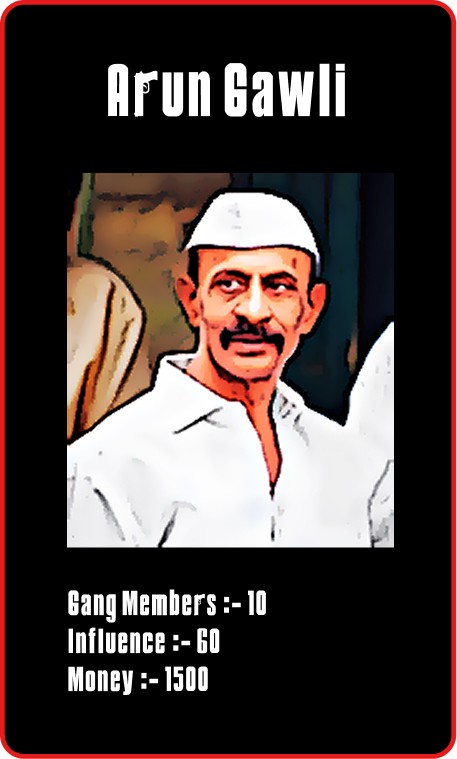
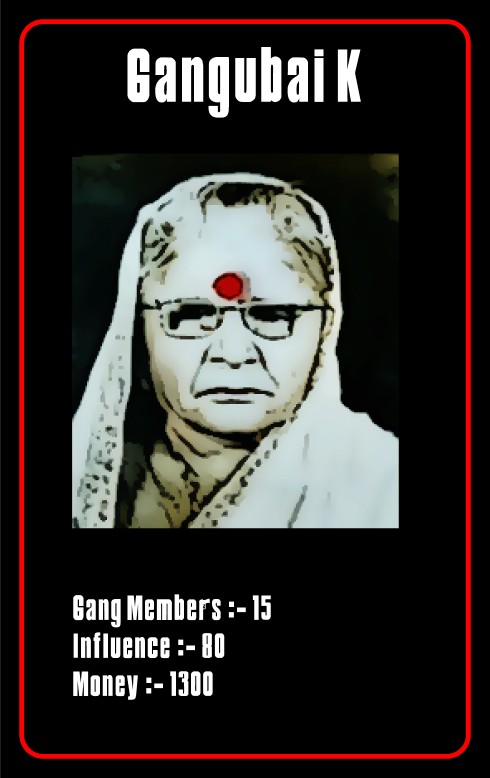
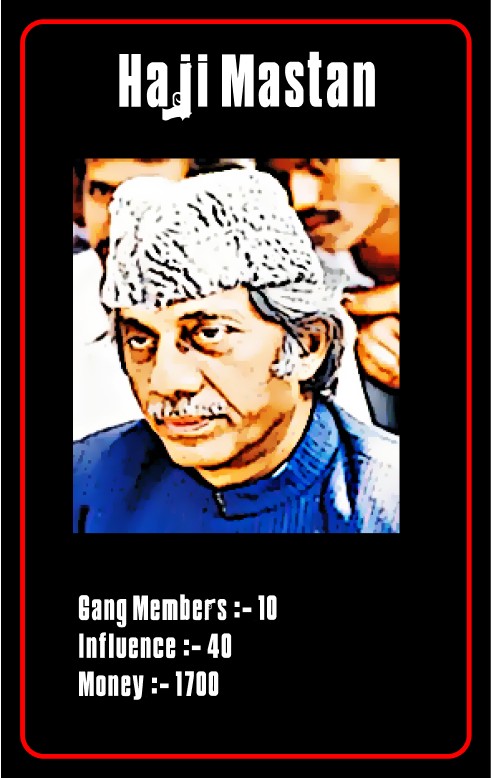
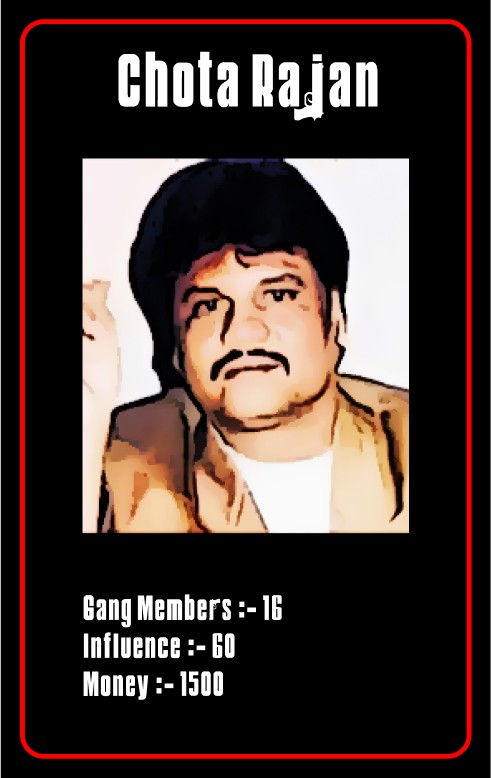
Each player begins the game by selecting a character card, which immediately plunges them into the world of the Mumbai underworld. Your chosen gangster, whether a major Don or a powerful figure of influence, is not just an identity—it's your starting capital.
Each character is strategically allotted a specific, predetermined amount of three core resources: Money (Rokda), Influence, and Gang Members. This initial distribution dictates your starting strategy and your immediate path to seizing control of the Bay.
Money (Rokda): Currency of Control
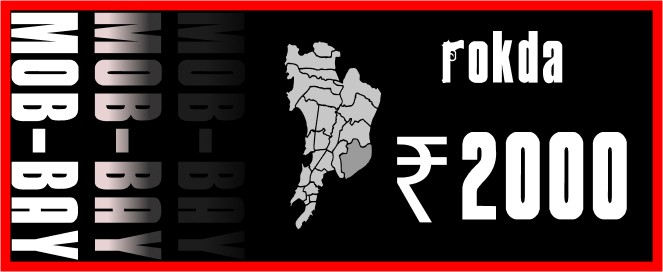
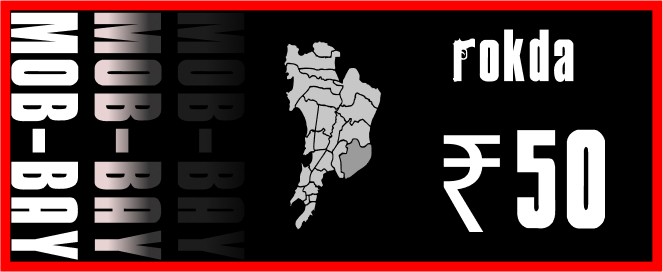
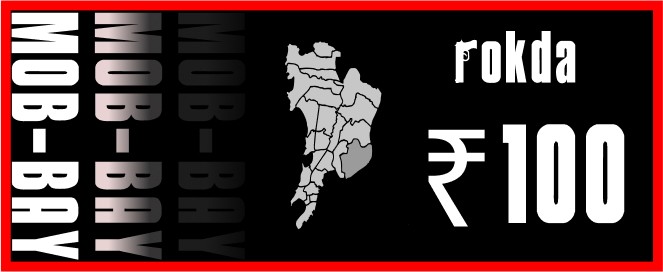
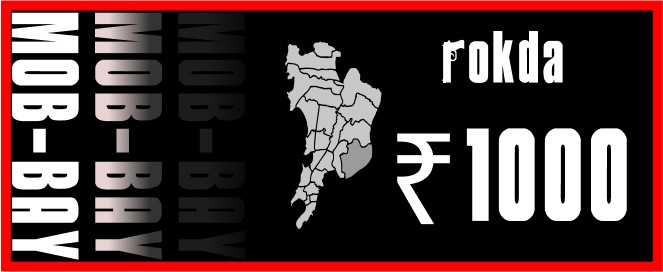
The currency notes, named Rokda, are the lifeblood of the Mumbai underworld. These funds are essential for expansion and survival.
Strategically, Rokda is used to purchase properties, securing revenue streams and increasing territorial control. Crucially, it also acts as a liability shield:
money can be used to reduce a player's wanted level, allowing them to mitigate police attention and stay out of jail.
MOB-BAY
Board Game Design
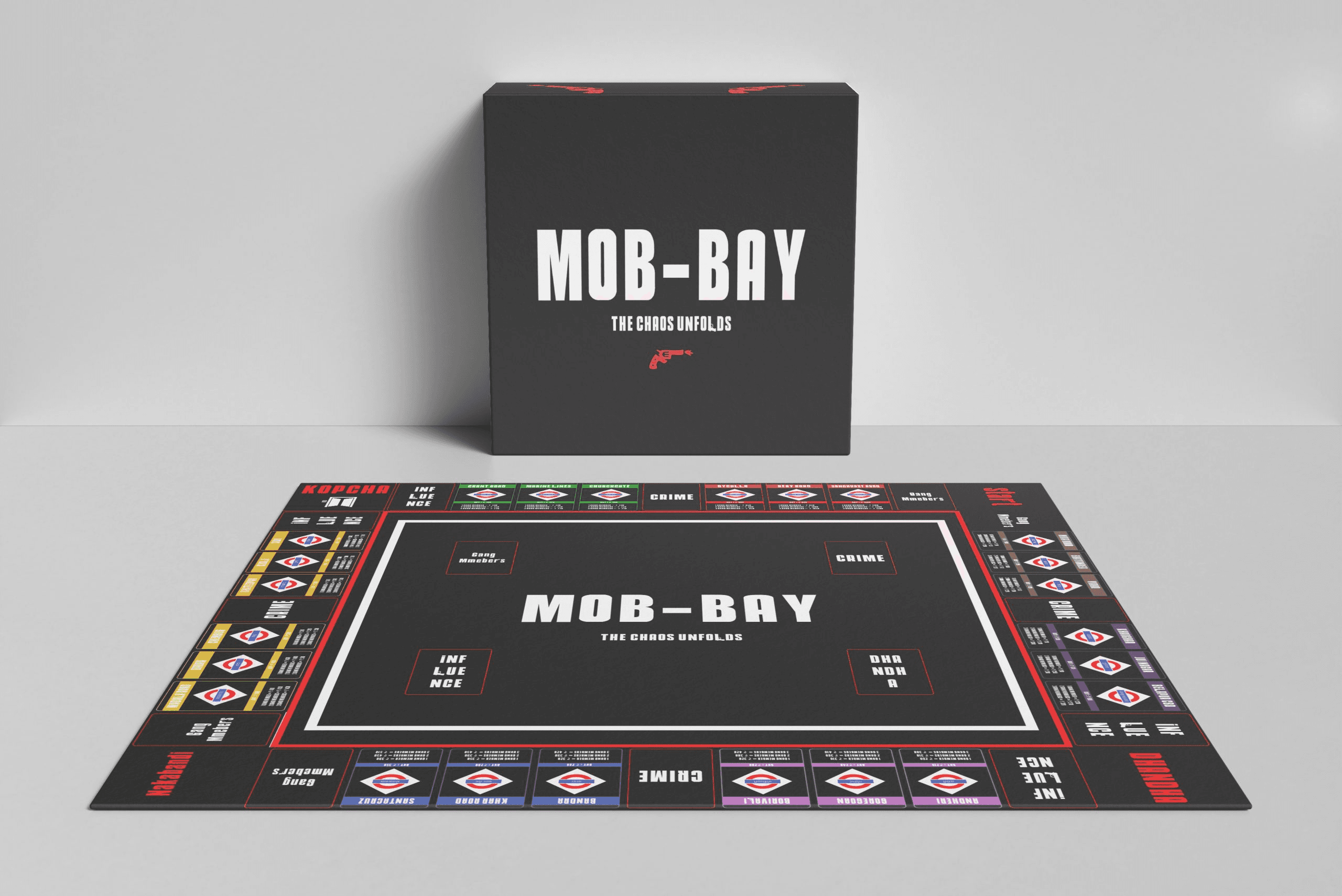
Mob-Bay is a strategic board game that plunges 2-4 players into the dangerous 1980s and 90s Mumbai gang scene. Players assume the role of rival gangsters, utilizing area control and resource management to seize territory in the Maximum City. The project focused on fusing a rich, authentic underworld theme with complex, balanced mechanics, realized through iterative design and extensive playtesting for competitive depth.
The game



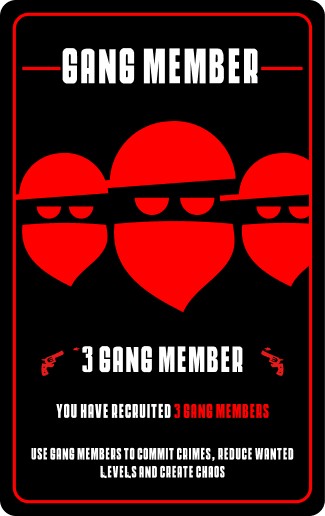
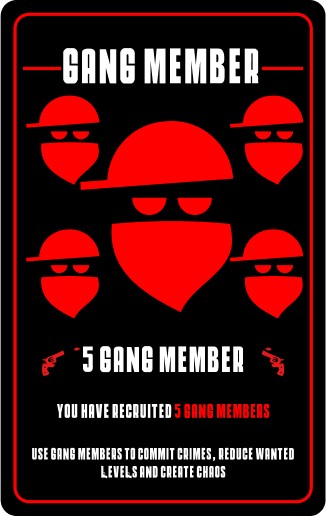
Gang Members: Foot Soldiers and Assets
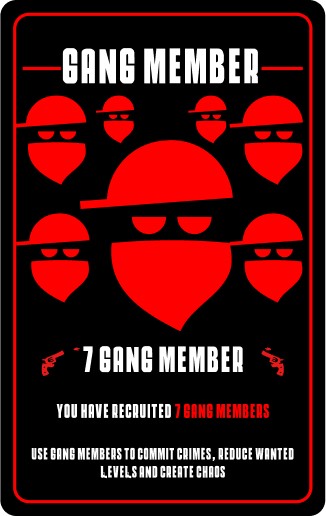
Your Gang Members are the versatile foot soldiers essential for executing your strategy.
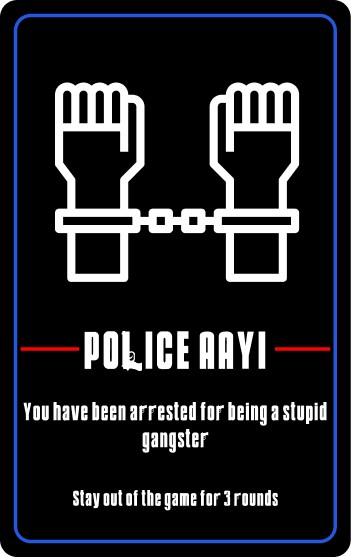
These resources serve multiple, critical roles: they are deployed to commit crimes to expand your income; they can be strategically stationed on your properties to increase rent collection; and, in a crucial defensive mechanic, they can be sacrificed and sent to jail in place of your main gangster character, shielding you from the devastating loss of three full rounds of play.
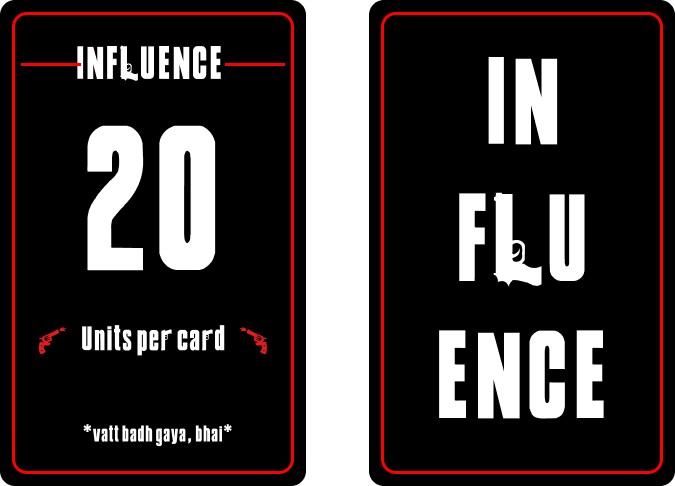
Influence: The Leverage of Power
Influence is the abstract but potent resource that grants players greater control and manipulation over the game's mechanics. It represents political clout and underworld connections.
This resource is strategically invaluable, as it can be leveraged in critical moments: Influence can be used to bribe your way out of jail to minimize downtime, or, more aggressively, to frame and send a rival player to jail, disrupting their operations and seizing a tactical advantage.
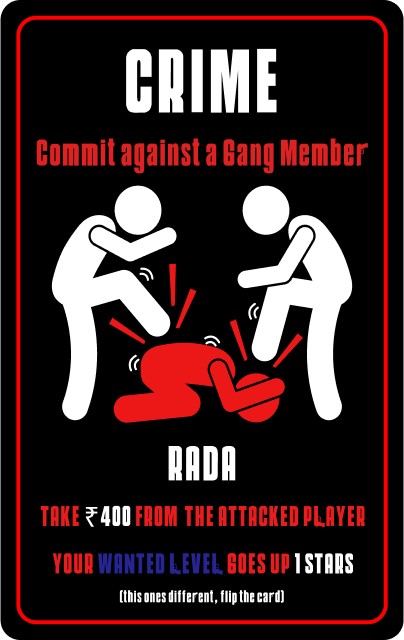
Committing Crimes: Risk vs. Reward
To finance their operations and expand their ranks, players must engage in Committing Crimes. This essential action is the primary route to earning immediate Money (Rokda) and recruiting new Gang Members.
However, each available crime is a strategic variable: Every crime contains a different sum of money, as well as a different wanted level. Players must constantly weigh the potential financial gain against the rising threat of police attention and arrest.
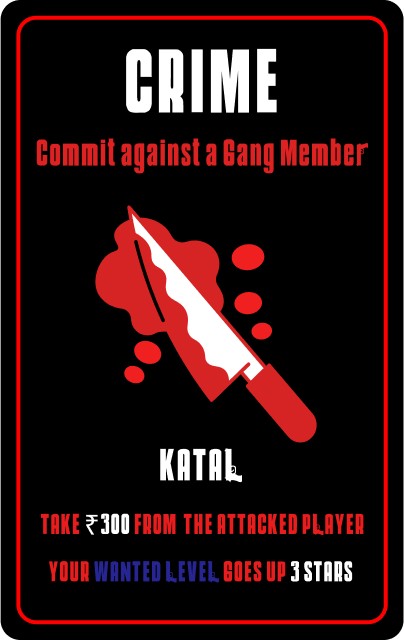
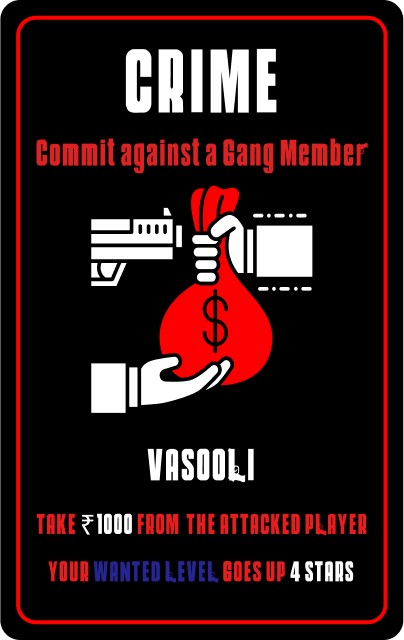
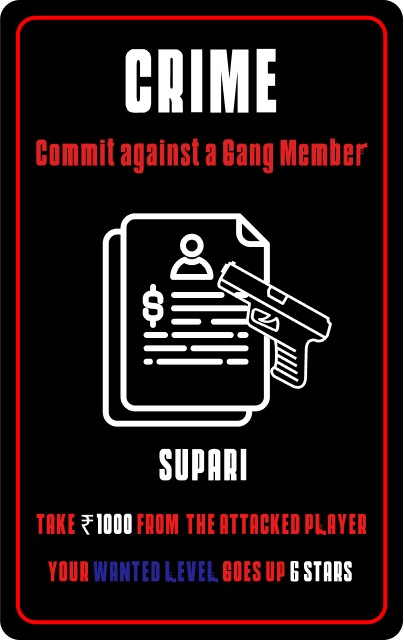
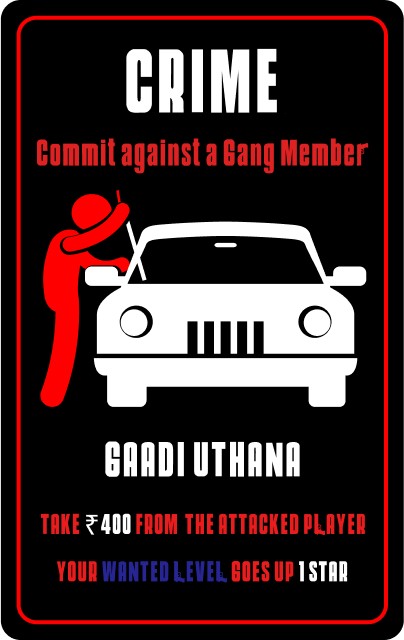
Wanted Level: The Heat on the Streets
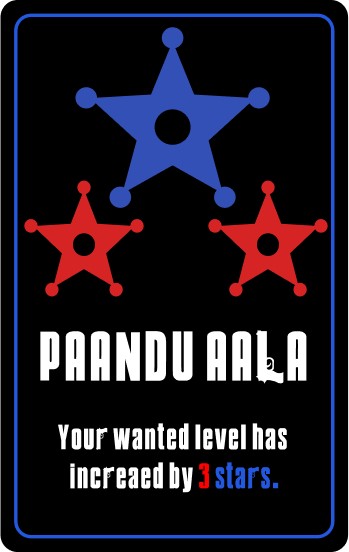
Throughout the course of the game, players must contend with their rising Wanted Level. This mechanic is the direct consequence of committing crimes and serves as a constant pressure point.
As players commit offenses, they collect stars on their Wanted Level, indicating how closely they are being tracked by law enforcement. The higher the star count, the closer the player is to an inevitable arrest and mandatory downtime in jail, making risk management a central strategic element.


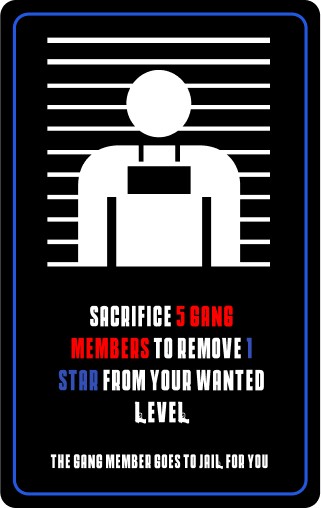
Power cards - Strategic Sacrifice
To manage the rising danger of the Wanted Level, players have a strategic option to sacrifice their Gang Members to mitigate police attention. As detailed on the power card, this is a crucial resource trade-off: five Gang Members must be sacrificed to remove one star from the player's Wanted Level.
This mechanic offers a necessary pressure release, allowing the main gangster to stay in the game, avoid the debilitating downtime of an arrest, and continue seizing control of the streets.

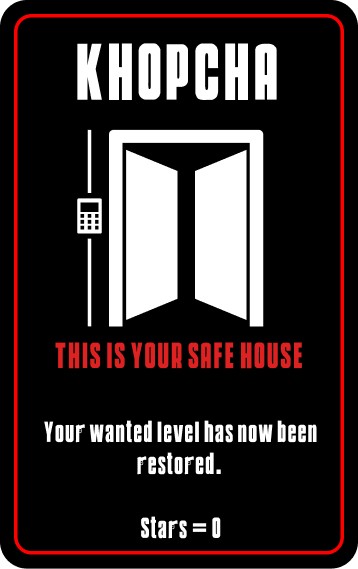
Power cards - The Khopcha
Strategically located on the game board is the rare and invaluable option of reaching the Khopcha. In the Mumbai underworld, Khopcha means a secluded, safe corner.
Landing on this spot provides a crucial, non-resource-based tactical advantage: it allows players to completely restore their Wanted Level, effectively wiping the slate clean of all accumulated stars and police heat, ensuring survival and the ability to plot the next high-risk move without the threat of immediate arrest.

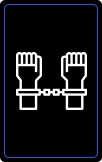
Power cards - ARREST CARD
Strategically located on the game board is the rare and invaluable option of reaching the Khopcha. In the Mumbai underworld, Khopcha means a secluded, safe corner.
Landing on this spot provides a crucial, non-resource-based tactical advantage: it allows players to completely restore their Wanted Level, effectively wiping the slate clean of all accumulated stars and police heat, ensuring survival and the ability to plot the next high-risk move without the threat of immediate arrest.
The Dhandha: Investing in the Underworld
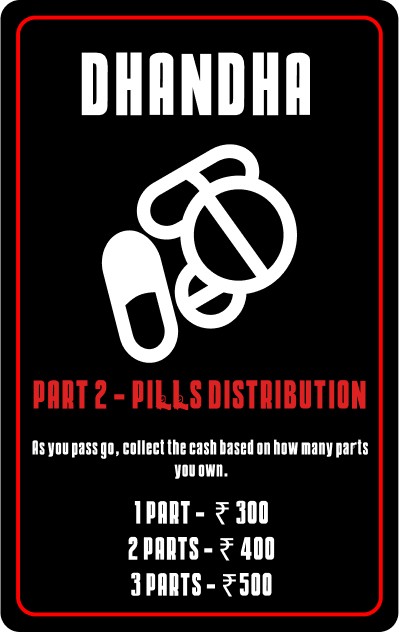
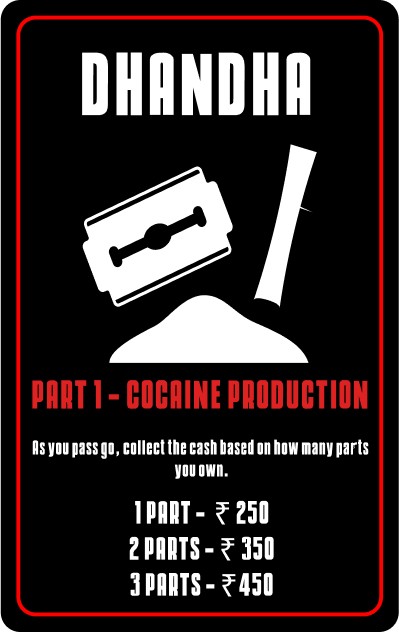
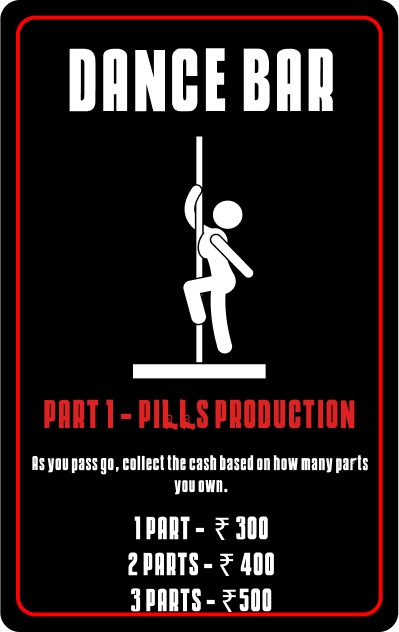
To strategically gain more money and increase territorial control, players have the ability to start a business, or Dhandha. This vital opportunity is integrated throughout the game board.
The chance to establish a Dhandha is triggered as a player lands on the designated 'Dhandha' option.
When this occurs, they must pick the topmost card from the corresponding section on the board. These cards determine the type of business established and the potential for long-term profit and influence, formalizing your economic stronghold in the city.

The Board: A Map of Mumbai Dominance
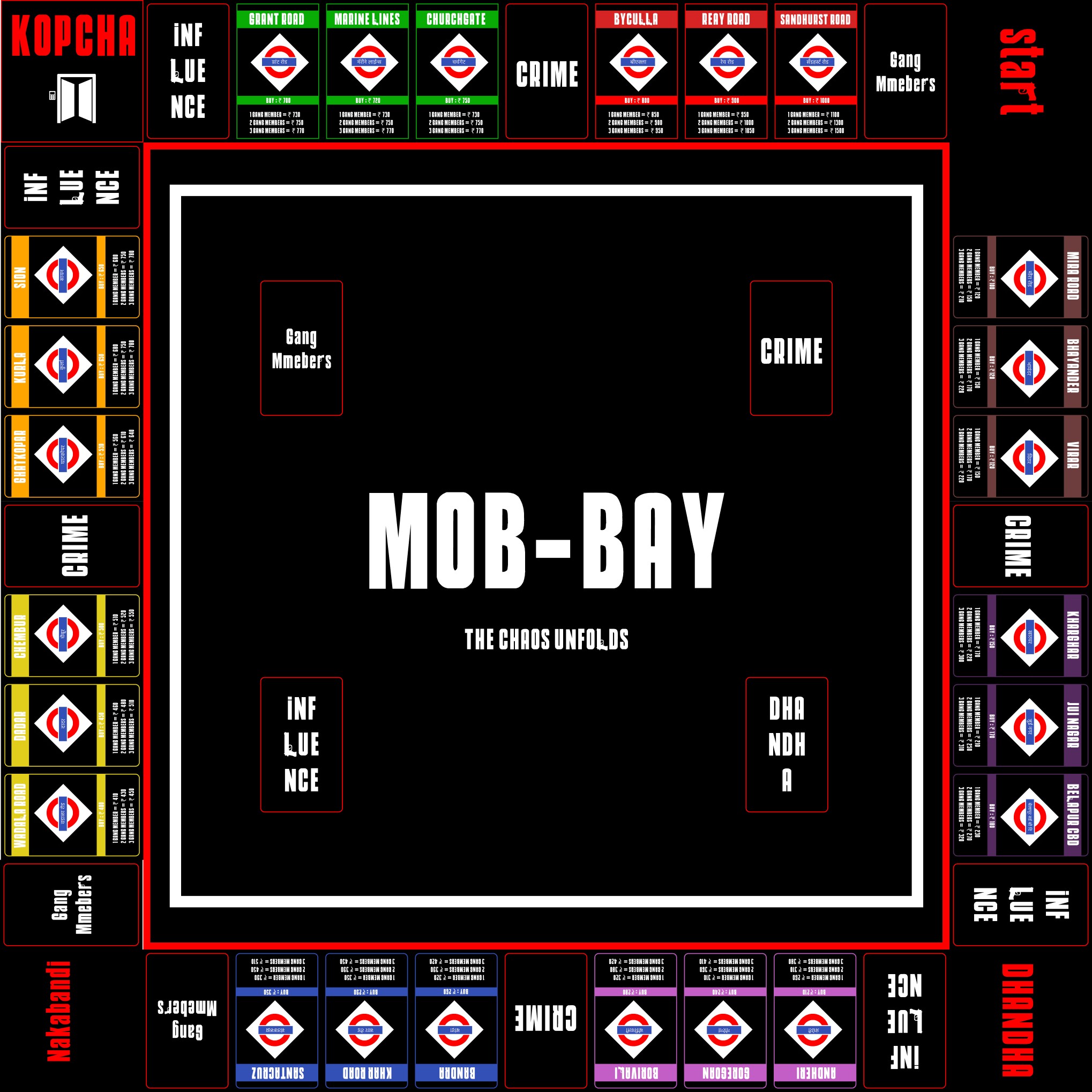
The game board itself is the strategic heart of Mob-Bay and an abstracted map of the city's key criminal territories. The entire layout reinforces the constant tension of the game, with core action zones like CRIME, INFLUENCE, and DHANDHA (Business) opportunities positioned along the paths of potential gang expansion.
The Action Zones
The playing area includes specialized decks and locations that drive the core loop of the game:
Power Cards: Players must shuffle and keep all four power card decks (Influence, Crime, Gang Members, and Dhandha) in the center of the board. When a player lands on the respective space, they must pick the topmost card.
Khopcha Sanctuary: The highly visible Khopcha location acts as a rare safe haven, allowing a player to clear their entire
Wanted Level, reinforcing the importance of tactical movement.
Unwavering Rules: The game ensures equal opportunity (and risk): nothing can be chosen by any player —you must take the top card—underscoring the chaotic and unpredictable nature of the Mumbai underworld.
The Locations: Valuing Turf
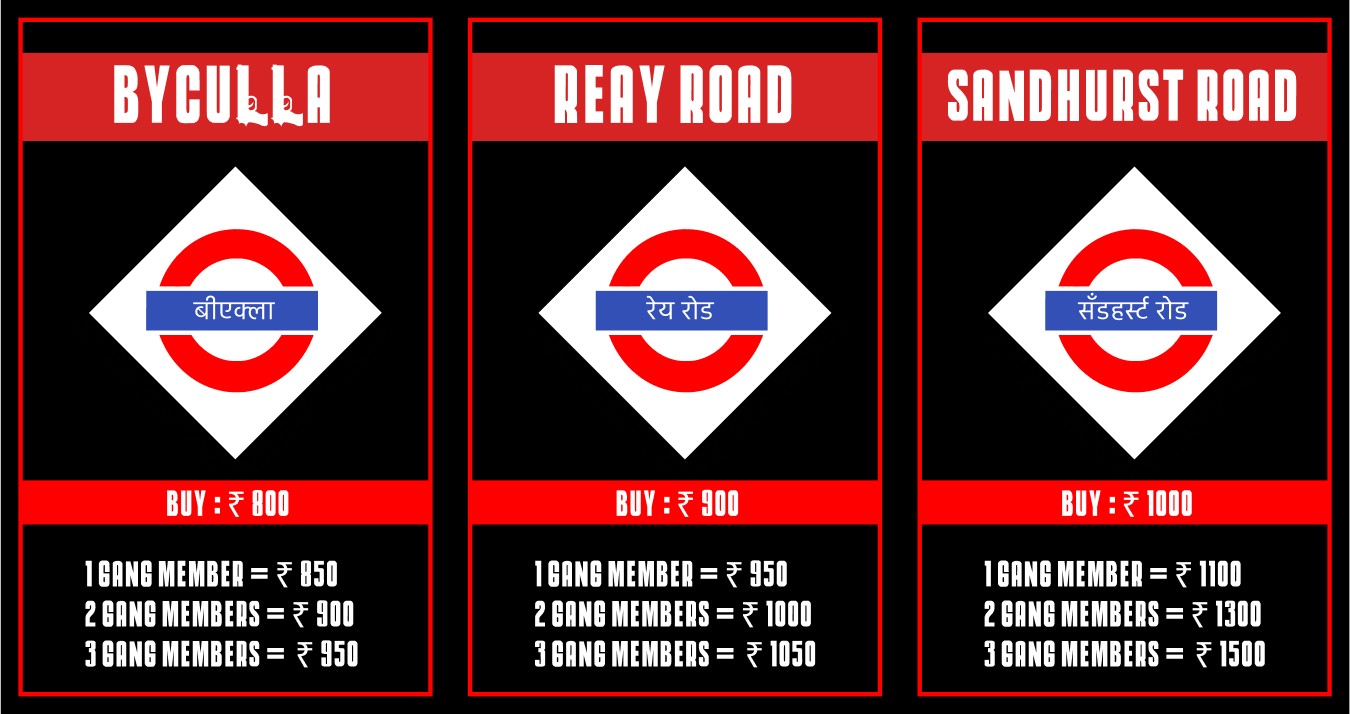
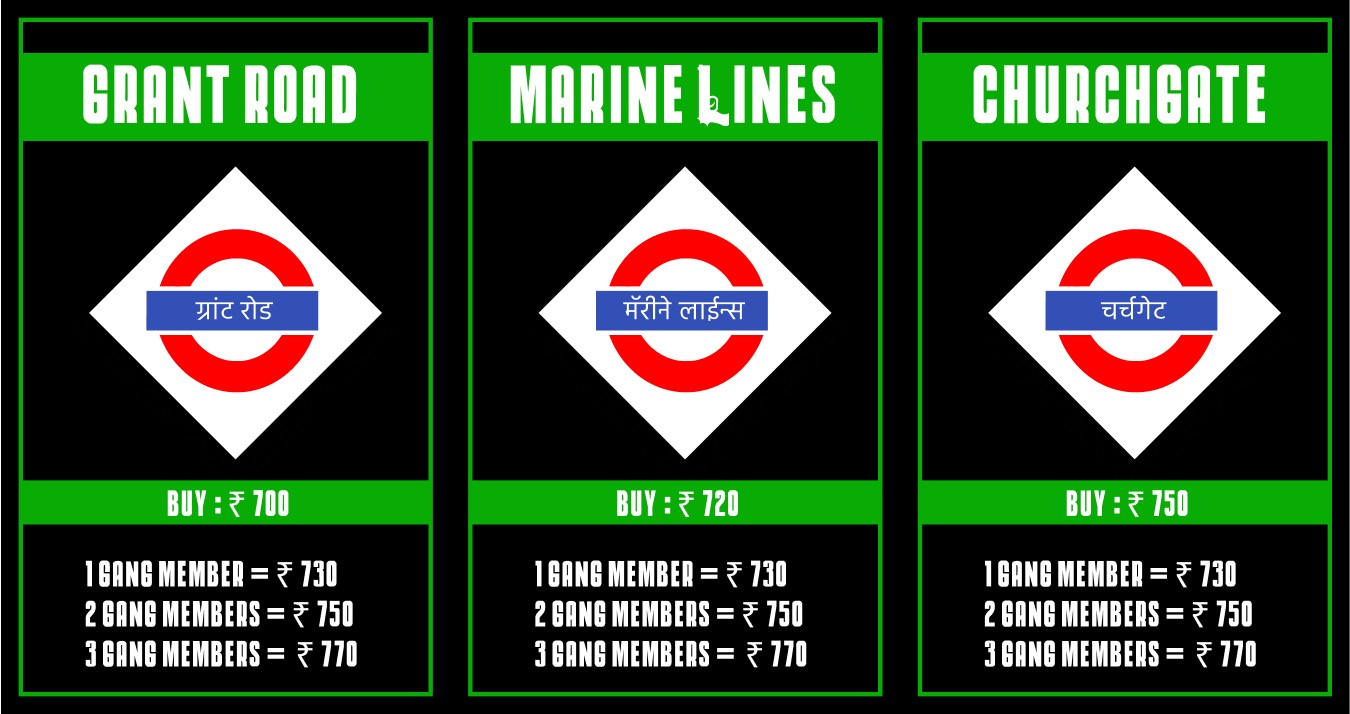
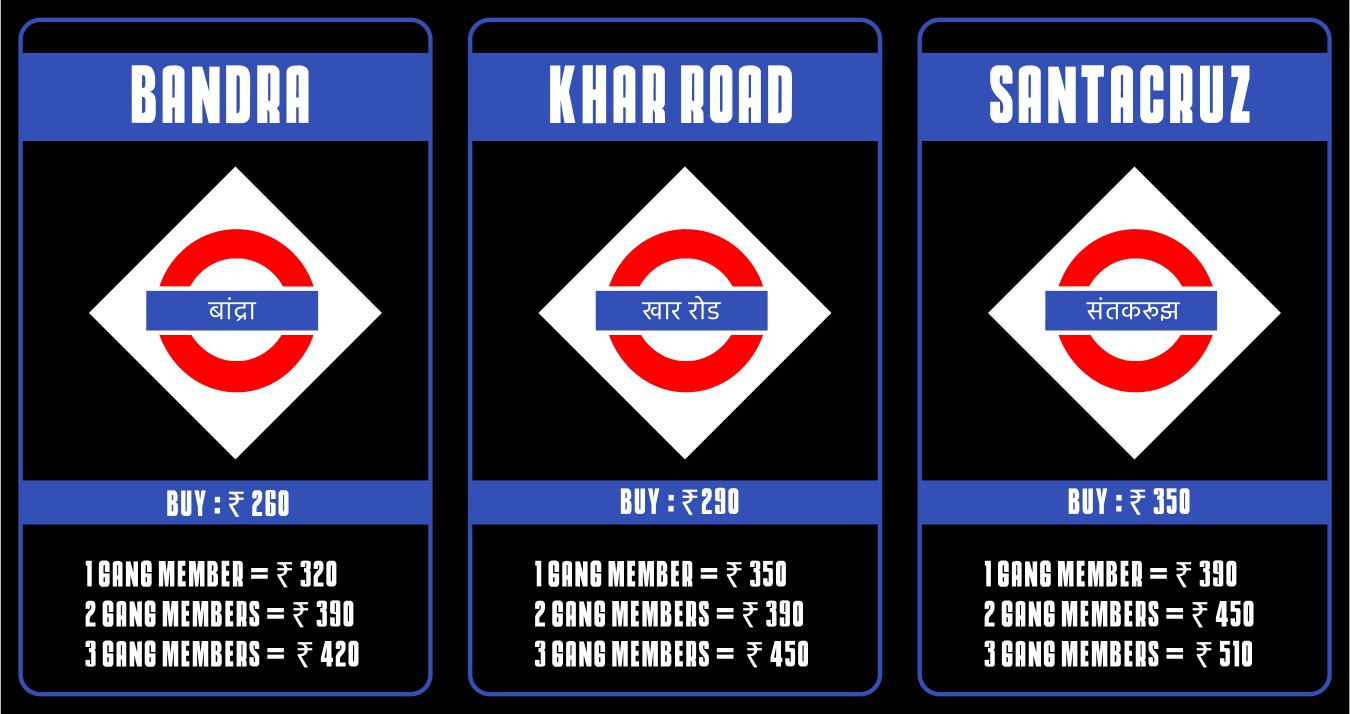
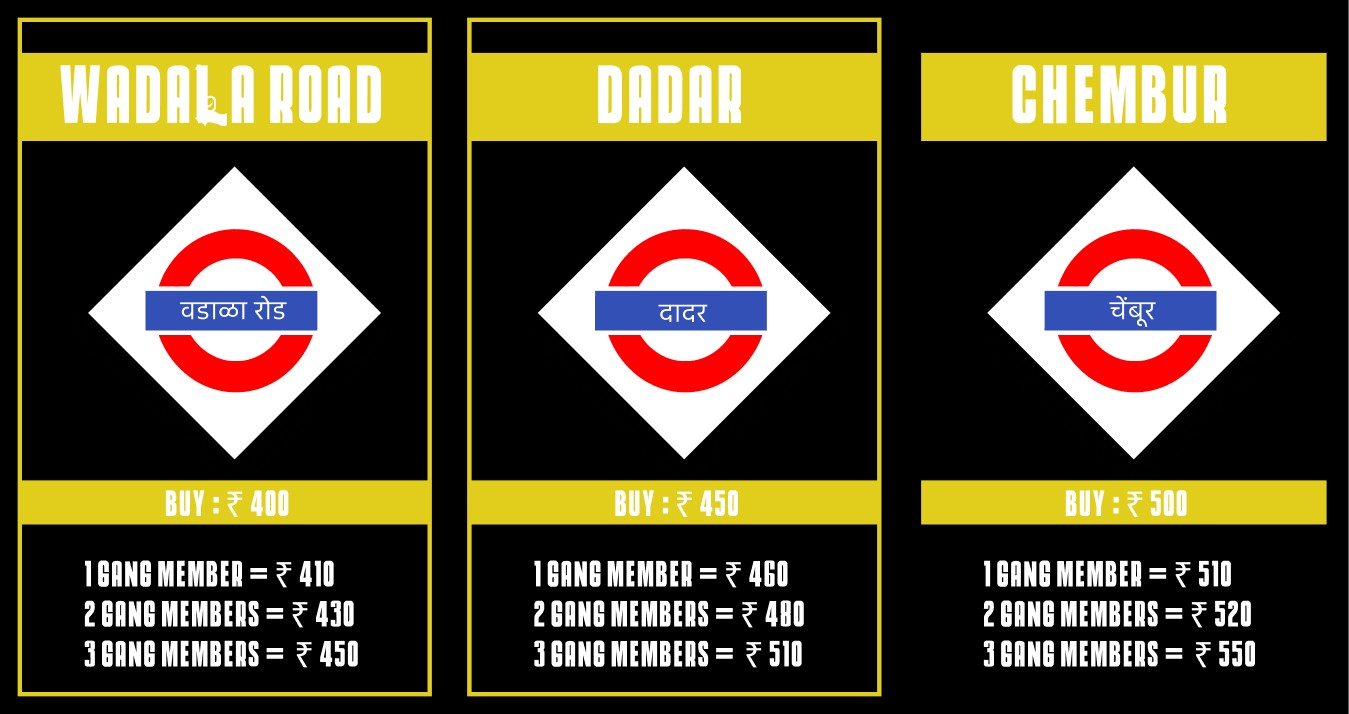
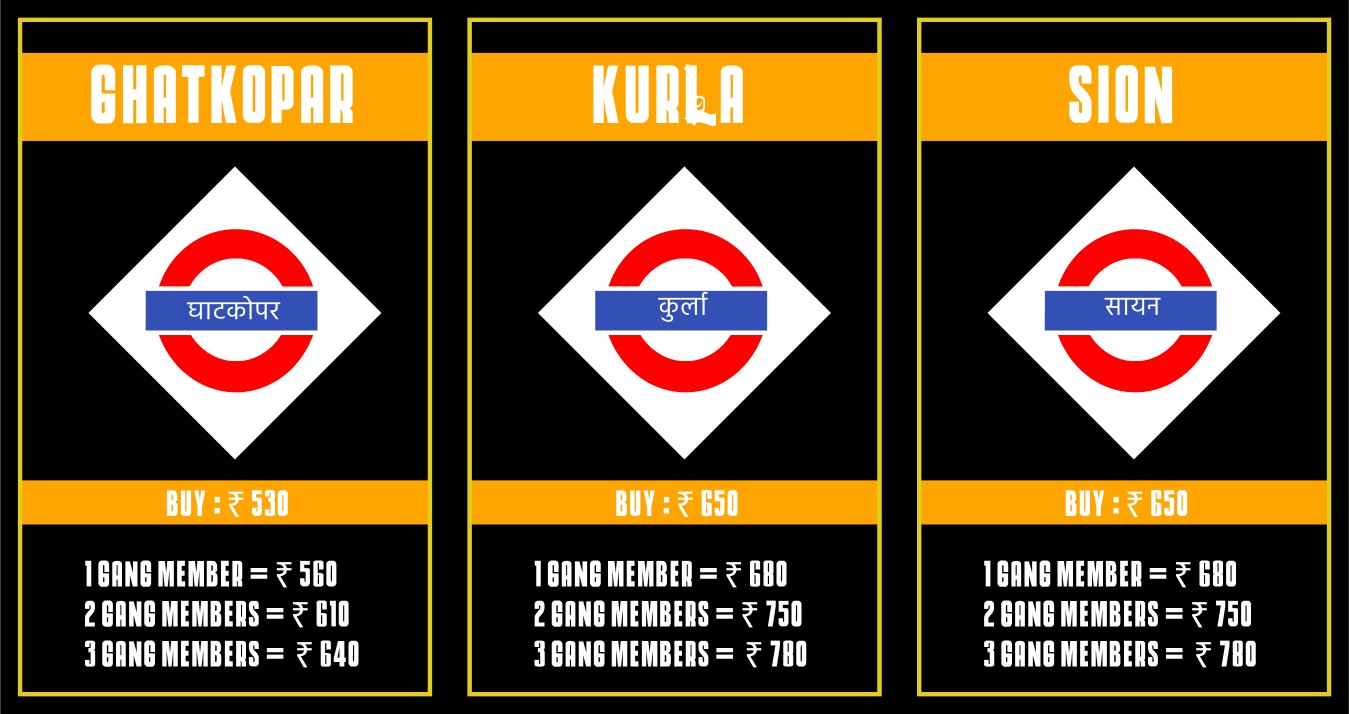
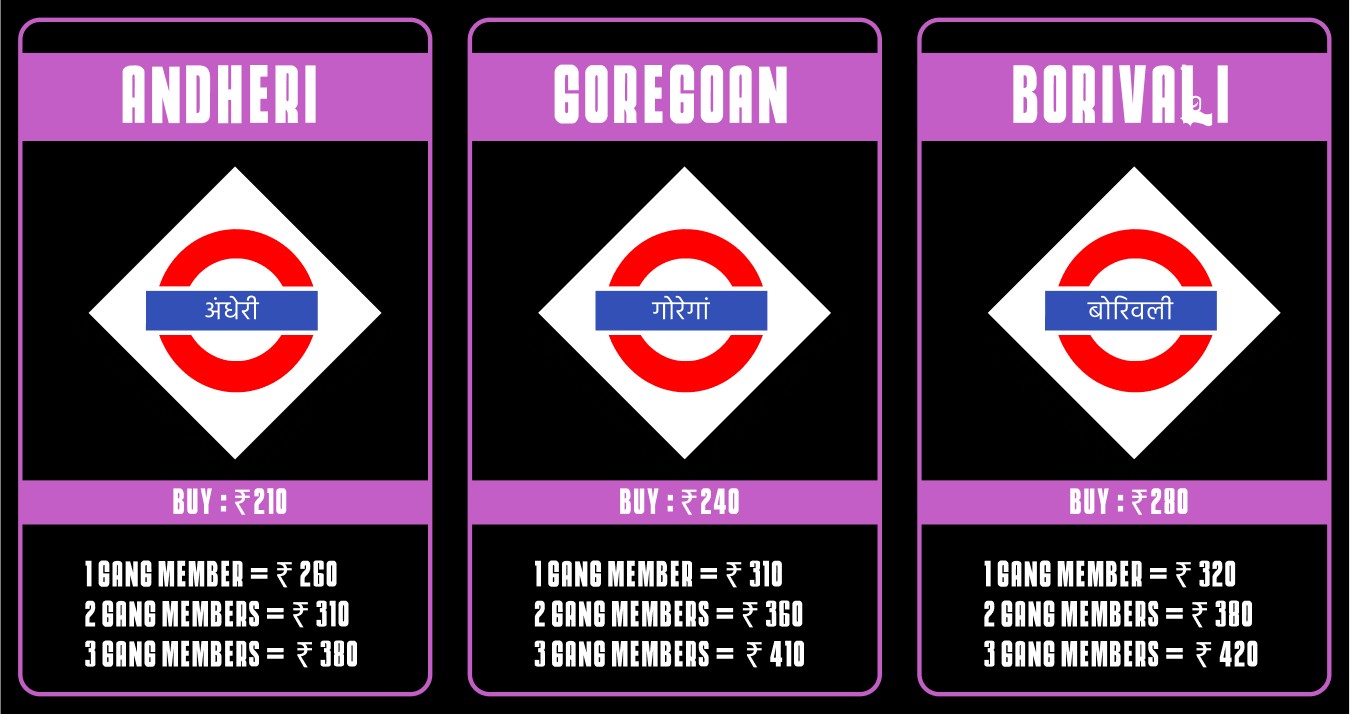
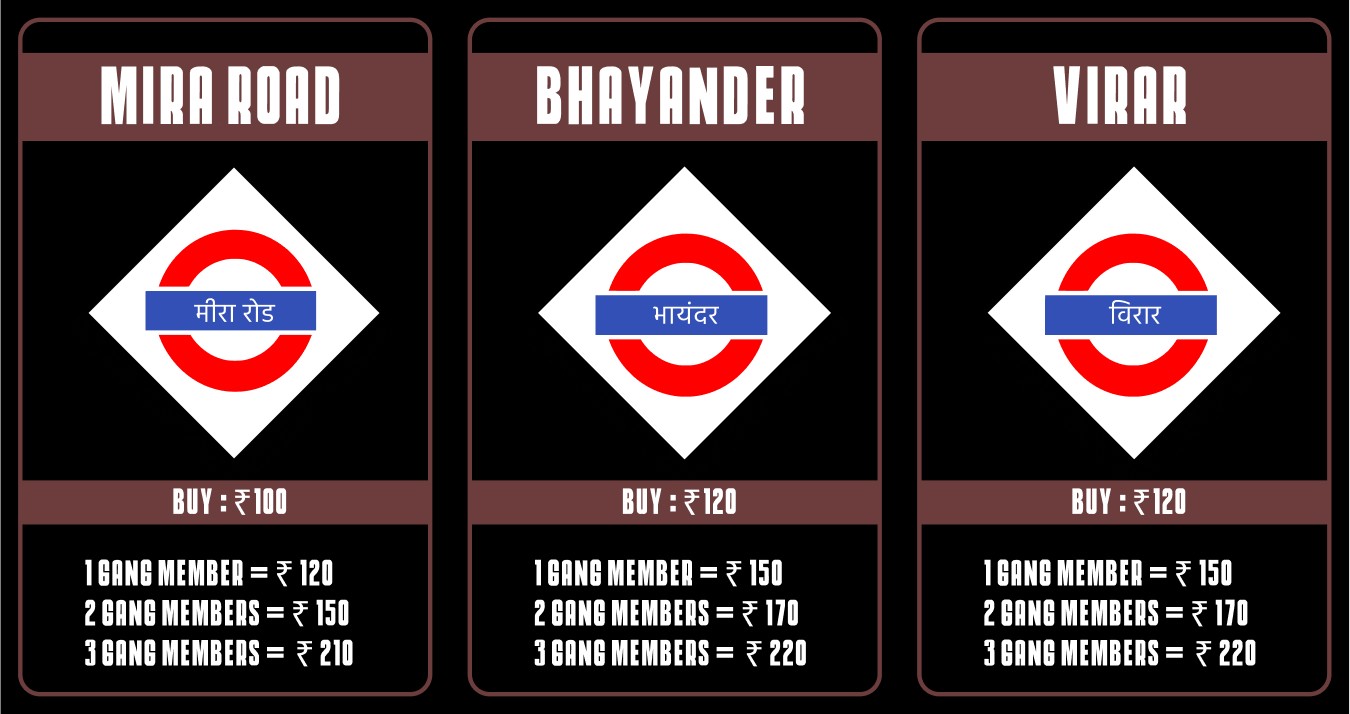
The properties and key locations around the board are color-coordinated based on their value during the 80s and 90s underworld era. This system guides player strategy and investment:
Valuation Scale: The locations reflect property rates and are color-coordinated based on their value at the time.
Highest Value Turf: The
color represents the highest value properties, requiring the largest investment but yielding the highest returns in control and rent.
Lowest Value Turf: The brown color represents the lowest value properties, offering an easier entry point for new gangsters to begin building their empire.

MOB-BAY
Board Game Design
Mob-Bay is a strategic board game that plunges 2-4 players into the dangerous 1980s and 90s Mumbai gang scene. Players assume the role of rival gangsters, utilizing area control and resource management to seize territory in the Maximum City. The project focused on fusing a rich, authentic underworld theme with complex, balanced mechanics, realized through iterative design and extensive playtesting
for competitive depth.
Brief details
Project name
Mob-bay
Client
passion project
Industry
board games, strategy, game design
Role
game designer, strategist
Deliverable
board game set
Duration
7 months
TOOLS
adobe suit, figma, mira
THE CONTEXT
Mob-Bay draws its narrative gravity from a turbulent and notorious chapter in the history of Mumbai (then Bombay), where organized crime reached unprecedented heights of influence and violence between the 1960s and 1990s.
This period was defined by intense Gang Wars and Vendettas as rival syndicates—led by real-life figures—battled fiercely for total control over the city’s economic lifeblood. The game’s premise is built upon the reality of these powerful struggles, allowing players to embody a gangster from that era, such as Dawood Ibrahim or Haseena Parker, and plot their own route to conquer Bombay.
Success in this volatile world hinged on leveraging Influence, managing Gang Members (used to commit crimes or defend properties), and navigating the constant threat of the Wanted Level when trying to expand control over the city.
THE Reference
To achieve authentic, gritty immersion, the design for Mob-Bay was grounded in intensive research that went beyond typical references.
The strategic framework and factional conflicts were heavily influenced by journalistic deep dives like S. Hussain Zaidi’s Dongri to Dubai and Shujaat Saudagar’s Bambai Meri Jaan.
Furthermore, the game’s unique voice and authentic underworld lexicon were drawn from interviews with veteran reporters of that era and the raw atmosphere captured in personal recordings of the gangsters which went public. This rigorous, multi-source research ensured that every mechanic and visual choice was a strategic echo of the volatile 80s and 90s Bombay underworld.
The game
Each player begins the game by selecting a character card, which immediately plunges them into the world of the Mumbai underworld. Your chosen gangster, whether a major Don or a powerful figure of influence, is not just an identity—it's your starting capital.
Each character is strategically allotted a specific, predetermined amount of three core resources: Money (Rokda), Influence, and Gang Members. This initial distribution dictates your starting strategy and your immediate path to seizing control of the Bay.
The Gangster Identity
Money (Rokda): Currency of Control
The currency notes, named Rokda, are the lifeblood of the Mumbai underworld. These funds are essential for expansion and survival.
Strategically, Rokda is used to purchase properties, securing revenue streams and increasing territorial control. Crucially, it also acts as a liability shield:
money can be used to reduce a player's wanted level, allowing them to mitigate police attention and stay out of jail.
Gang Members
Foot Soldiers and Assets
Your Gang Members are the versatile foot soldiers essential for executing your strategy.
These resources serve multiple, critical roles: they are deployed to commit crimes to expand your income; they can be strategically stationed on your properties to increase rent collection; and, in a crucial defensive mechanic, they can be sacrificed and sent to jail in place of your main gangster character, shielding you from the devastating loss of three full rounds of play.
InfluencE
The Leverage of Power
Influence is the abstract but potent resource that grants players greater control and manipulation over the game's mechanics. It represents political clout and underworld connections.
This resource is strategically invaluable, as it can be leveraged in critical moments: Influence can be used to bribe your way out of jail to minimize downtime, or, more aggressively, to frame and send a rival player to jail, disrupting their operations and seizing a tactical advantage.
Committing Crimes
Risk vs. Reward
To finance their operations and expand their ranks, players must engage in Committing Crimes. This essential action is the primary route to earning immediate Money (Rokda) and recruiting new Gang Members.
However, each available crime is a strategic variable: Every crime contains a different sum of money, as well as a different wanted level. Players must constantly weigh the potential financial gain against the rising threat of police attention and arrest.
Wanted Level
The Heat on the Streets
Throughout the course of the game, players must contend with their rising Wanted Level. This mechanic is the direct consequence of committing crimes and serves as a constant pressure point.
As players commit offenses, they collect stars on their Wanted Level, indicating how closely they are being tracked by law enforcement. The higher the star count, the closer the player is to an inevitable arrest and mandatory downtime in jail, making risk management a central strategic element.
Power cards - Strategic Sacrifice
To manage the rising danger of the Wanted Level, players have a strategic option to sacrifice their Gang Members to mitigate police attention. As detailed on the power card, this is a crucial resource trade-off: five Gang Members must be sacrificed to remove one star from the player's Wanted Level.
This mechanic offers a necessary pressure release, allowing the main gangster to stay in the game, avoid the debilitating downtime of an arrest, and continue seizing control of the streets.
Power cards - The Khopcha
Strategically located on the game board is the rare and invaluable option of reaching the Khopcha. In the Mumbai underworld, Khopcha means a secluded, safe corner.
Landing on this spot provides a crucial, non-resource-based tactical advantage: it allows players to completely restore their Wanted Level, effectively wiping the slate clean of all accumulated stars and police heat, ensuring survival and the ability to plot the next high-risk move without the threat of immediate arrest.
Power cards - ARREST CARD
Strategically located on the game board is the rare and invaluable option of reaching the Khopcha. In the Mumbai underworld, Khopcha means a secluded, safe corner.
Landing on this spot provides a crucial, non-resource-based tactical advantage: it allows players to completely restore their Wanted Level, effectively wiping the slate clean of all accumulated stars and police heat, ensuring survival and the ability to plot the next high-risk move without the threat of immediate arrest.
The Dhandha
Investing in the Underworld
To strategically gain more money and increase territorial control, players have the ability to start a business, or Dhandha. This vital opportunity is integrated throughout the game board.
The chance to establish a Dhandha is triggered as a player lands on the designated 'Dhandha' option.
When this occurs, they must pick the topmost card from the corresponding section on the board. These cards determine the type of business established and the potential for long-term profit and influence, formalizing your economic stronghold in the city.
The Board
A Map of Mumbai Dominance
The game board itself is the strategic heart of Mob-Bay and an abstracted map of the city's key criminal territories. The entire layout reinforces the constant tension of the game, with core action zones like CRIME, INFLUENCE, and DHANDHA (Business) opportunities positioned along the paths of potential gang expansion.
The Action Zones
The playing area includes specialized decks and locations that drive the core loop of the game:
Power Cards: Players must shuffle and keep all four power card decks (Influence, Crime, Gang Members, and Dhandha) in the center of the board. When a player lands on the respective space, they must pick the topmost card.
Khopcha Sanctuary: The highly visible Khopcha location acts as a rare safe haven, allowing a player to clear their entire
Wanted Level, reinforcing the importance of tactical movement.
Unwavering Rules: The game ensures equal opportunity (and risk): nothing can be chosen by any player —you must take the top card—underscoring the chaotic and unpredictable nature of the Mumbai underworld.
The Locations: Valuing Turf
The properties and key locations around the board are color-coordinated based on their value during the 80s and 90s underworld era. This system guides player strategy and investment:
Valuation Scale: The locations reflect property rates and are color-coordinated based on their value at the time.
Highest Value Turf: The
color represents the highest value properties, requiring the largest investment but yielding the highest returns in control and rent.
Lowest Value Turf: The brown color represents the lowest value properties, offering an easier entry point for new gangsters to begin building their empire.
Back